
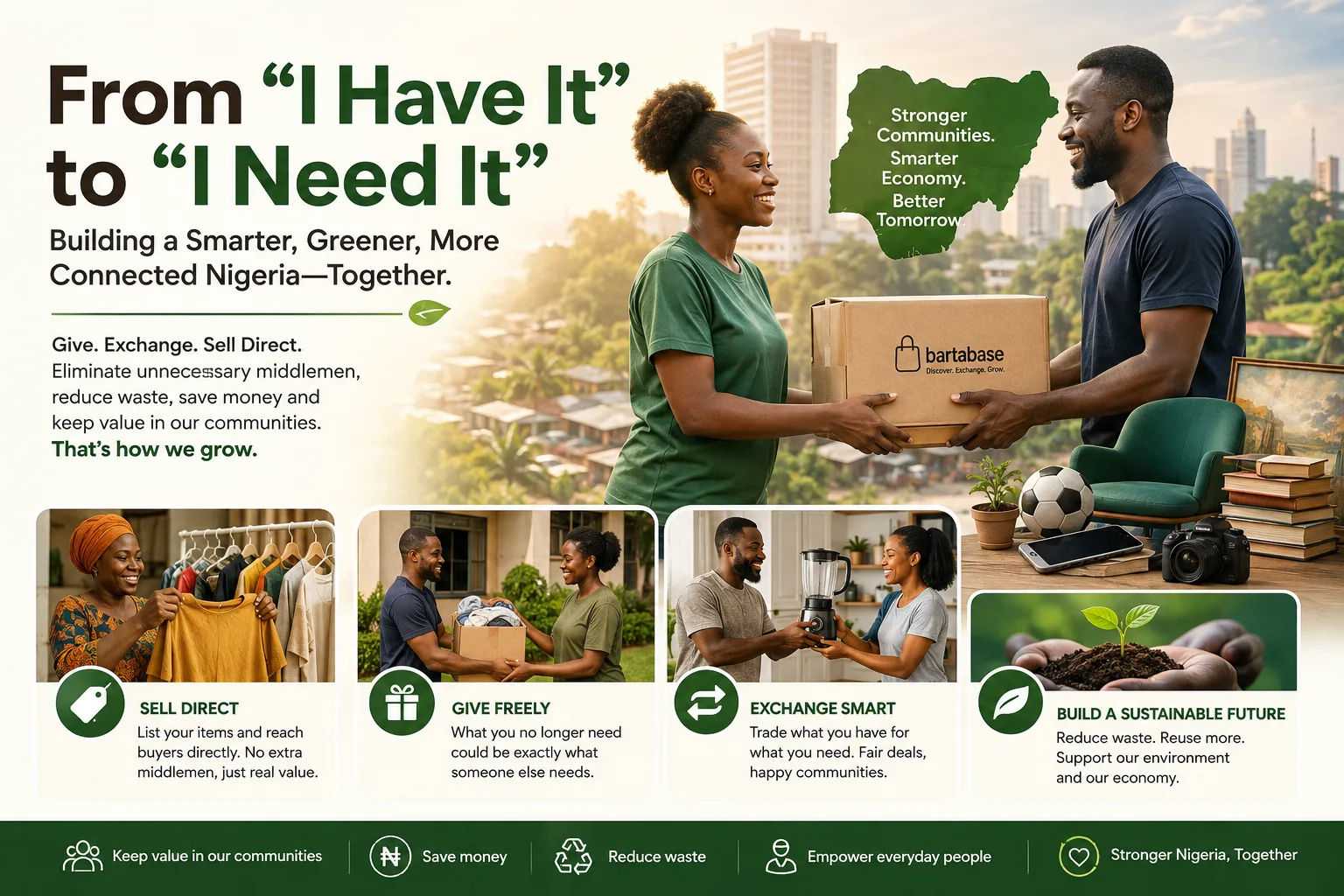
Nigeria has a fascinating relationship with commerce.
We are a nation of traders, entrepreneurs, artisans, farmers, creators and hustlers. From the roadside seller to the online entrepreneur, from the woman selling food in her neighbourhood to the business owner importing products, Nigerians have always found creative ways to buy and sell.
Yet, there is a problem hiding in plain sight.
Too many things are travelling through too many hands before they reach the person who actually needs them.
And every additional hand can mean another markup.
A product may leave its original owner at one price, pass through a distributor, a wholesaler, a retailer, an agent, a reseller and eventually reach the final buyer at a significantly higher price.
This is the middleman syndrome.
Middlemen are not inherently bad. In many cases, they provide valuable services such as transportation, storage, financing, distribution and market access. The problem arises when layers of intermediation exist simply because buyers and sellers have no easy way to find and transact with one another directly.
In an economy where households and businesses are under increasing pressure to make every naira count, perhaps we should ask a different question:
What if more Nigerians could simply connect directly with other Nigerians who already have what they need?
That simple idea has the potential to change how we think about buying, selling, giving and exchanging.
The Nigerian Economy Doesn't Only Have a Money Problem
When people talk about economic hardship, the conversation usually focuses on income.
How much do I earn?
How much does food cost?
How expensive is rent?
How much has transportation increased?
But there is another side of the equation that deserves more attention:
How efficiently are we using the resources we already have?
Consider the average Nigerian household.
There may be clothes that have barely been worn.
A phone that has been replaced but still works perfectly.
Furniture sitting unused in storage.
A television that someone no longer needs.
Children's items that have been outgrown.
Books that have already been read.
Kitchen equipment gathering dust.
Office equipment that is no longer required.
Tools that are used once every few months.
And sometimes, there are things that one person considers unnecessary while another person is actively looking for exactly the same thing.
The problem isn't necessarily that these things have no value.
The problem is that the people who have them and the people who need them often cannot find each other.
That is where a better marketplace can make a difference.
What If Your Unwanted Item Is Someone Else's Opportunity?
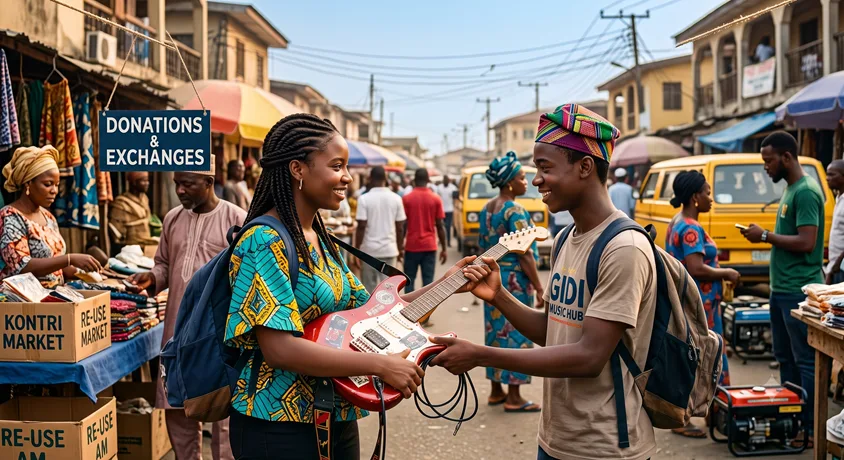
We often use the word "value" as though it has a single meaning.
It doesn't.
A chair sitting unused in your home may have very little value to you.
But to a young person furnishing their first apartment, that same chair could be extremely valuable.
A baby stroller your family no longer needs may be taking up space in your house.
To a new parent trying to reduce expenses, it could represent hundreds of thousands of naira saved.
An old laptop may no longer meet your professional requirements.
To a student learning programming, graphic design or data analysis, it could be the device that helps them begin their journey.
This is why marketplaces are more than places where money changes hands.
They are places where unused value is rediscovered.
Giving Is Also Part of the Economy
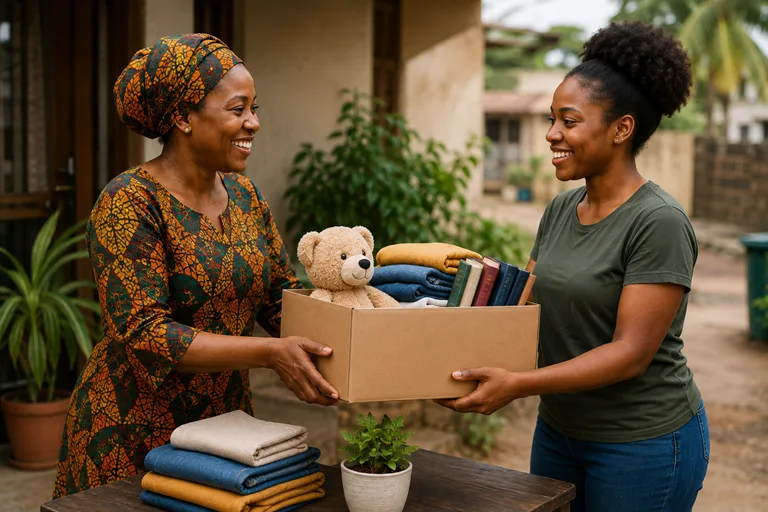
Giving is sometimes treated as something completely separate from commerce.
It shouldn't be.
When you give something that you no longer need to someone who genuinely needs it, you are helping move a resource from where it is underutilised to where it can create value.
That is economic activity in its own way.
Imagine a family clearing out their home.
Instead of throwing away perfectly usable items, they give them away.
Another family receives those items and doesn't have to spend money purchasing replacements.
The first family gains space.
The second family saves money.
A useful product remains in circulation.
And something that might eventually have become waste continues serving a purpose.
Everybody doesn't have to buy everything.
Sometimes, somebody simply needs to give.
The Forgotten Power of Exchange
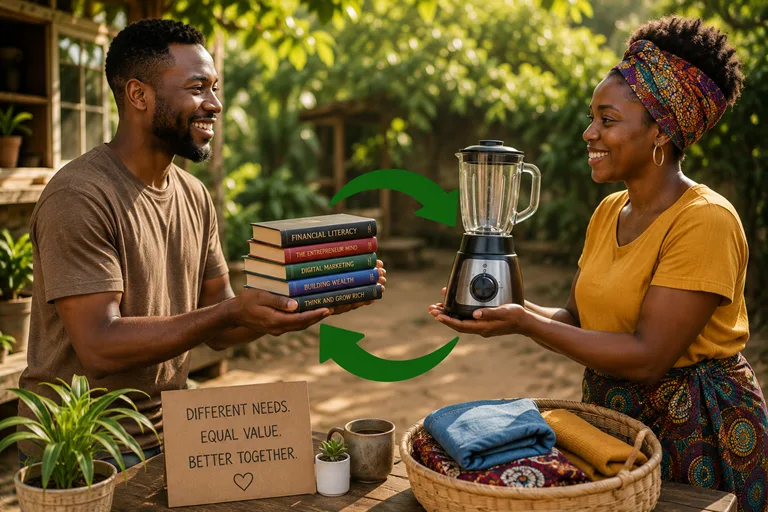
Before money became the dominant medium of exchange, people traded what they had for what they needed.
That principle still makes sense today.
You might have a dining table you no longer want.
Someone else might have a refrigerator you need.
One person has excess clothing.
Another has books.
One person has a phone they want to replace.
Another person may have equipment that the first person needs.
Why should every transaction necessarily require cash?
This is where exchange becomes powerful.
A good exchange marketplace allows people to say:
“This is what I have. This is what I need.”
And then find someone who says:
“That's exactly what I'm looking for.”
Sometimes the values will match.
Sometimes they won't.
Perhaps one item is worth ₦100,000 while the other is worth ₦70,000.
Instead of abandoning the transaction, the parties can negotiate a way to bridge the difference — perhaps with another item or a cash top-up.
This creates an entirely different way of thinking about ownership.
You don't always have to sell what you have in order to buy what you need. You can exchange value directly.
Removing Unnecessary Layers Can Make Commerce More Efficient
Let's take a simple example.
Imagine a manufacturer produces a product for ₦50,000.
By the time the product reaches the consumer, several businesses may have handled it.
Each participant has legitimate costs:
- transportation
- storage
- staff
- rent
- marketing
- financing
- distribution
- profit margins
By the time the final customer buys the product, the price could be significantly higher.
Again, there is nothing inherently wrong with this model.
But technology gives us another option.
What if the person who has the product can reach the person who wants it directly?
Digital marketplaces make this possible.
Instead of relying entirely on traditional chains of distribution, individuals and businesses can list products, discover buyers, communicate, negotiate and transact with one another.
The seller gets access to more potential customers.
The buyer gets access to more sellers.
Competition increases.
Price discovery improves.
And people have more choices.
This is one of the greatest opportunities created by digital commerce.
Direct-to-Buyer Commerce Gives Sellers More Freedom
One of the most important principles of a healthy marketplace is seller freedom.
A seller should be able to determine what they want to sell, how they want to present it and what price they are willing to accept — within reasonable marketplace rules.
They should not need several layers of intermediaries simply to reach a potential buyer.
A person selling a used phone should be able to find someone looking for that phone.
A person selling furniture should be able to reach people furnishing their homes.
A small business should be able to showcase its products directly to customers.
A person giving away an item should be able to reach someone who needs it.
And someone looking to exchange one item for another should have somewhere to make that request.
The internet has already changed how we communicate. It is now changing how we exchange value.
The Environmental Argument: Buy Less, Reuse More
There is another important reason this matters.
Our consumption habits have environmental consequences.
When usable products are discarded simply because their original owners no longer need them, we lose the resources, energy and labour that went into producing those products.
The alternative is not necessarily to stop buying.
It is to become smarter about how long products remain useful.
Buy what you need.
Sell what you no longer need.
Give away what someone else can use.
Exchange when it makes sense.
Repair where possible.
Reuse before replacing.
And keep useful products circulating for as long as possible.
This is one of the simplest ways individuals can participate in a more circular economy.
A product does not have to remain with its first owner to remain valuable.
A Circular Economy Can Start in Your Living Room
The phrase circular economy can sound like something reserved for governments, environmental organisations and large corporations.
But it can start somewhere much simpler:
Your home.
Look around.
What are you no longer using?
What is sitting in a cupboard?
What has been replaced but still works?
What have your children outgrown?
What are you storing "just in case"?
What could someone else use?
Now ask another question:
What do you need that someone else may already have?
That simple exercise changes the way we see our possessions.
Instead of viewing unused items as rubbish, we begin to see them as resources.
Instead of immediately buying something new, we consider whether someone nearby already has it.
Instead of throwing something away, we ask whether someone else could benefit from it.
And instead of assuming every transaction must involve a conventional sale, we consider giving and exchange.
This Is Where Bartabase Comes In
At Bartabase, we believe marketplaces should do more than help people buy and sell.
They should help people connect value with need.
Bartabase gives people a place to list items they want to sell, give away or exchange, while allowing other people to discover things they need.
It is about creating more direct connections between people.
Have something you no longer need? List it.
Looking for something? Search for it.
Want to sell? Connect directly with potential buyers.
Want to give something away? Find someone who can use it.
Want to exchange? Put forward what you have and see what you can find.
The goal is simple:
Less waste. More access. More choice. More direct connections.
Imagine a Nigeria Where More Things Stay in Circulation
Imagine a student getting a laptop from someone who upgraded theirs.
Imagine a young family furnishing their home with quality second-hand furniture instead of buying everything new.
Imagine parents passing children's items to families who need them.
Imagine someone exchanging an unused appliance for something they actually need.
Imagine a small business reaching customers without having to depend entirely on traditional distribution channels.
Imagine someone clearing their home and discovering that the things they considered clutter could actually help someone else.
Imagine thousands of these transactions happening every day.
That isn't just e-commerce.
That is a community exchanging value.
We Need to Change the Way We Think About Ownership
Perhaps the biggest shift is philosophical.
We have been taught to think:
“I own this, therefore it belongs to me.”
But there is another way to think about it:
“I own this, therefore I can decide what happens to it next.”
Sell it.
Give it.
Exchange it.
Donate it.
Pass it on.
Whatever makes sense.
Ownership should give people freedom — not create unnecessary waste.
And marketplaces should give people the tools to exercise that freedom.
The Future of Commerce May Be More Human
Technology often gets blamed for making society less personal.
But the right technology can do the opposite.
A marketplace can introduce you to someone who lives nearby.
A buyer can discover a seller they would never have found otherwise.
A person can receive something from someone they have never met.
Two people can negotiate an exchange.
A family can give something away and know it has gone to someone who needs it.
A seller can build a reputation based on how they treat people.
These are not merely transactions.
They are human connections enabled by technology.
Start With One Item
You don't have to change the Nigerian economy overnight.
Start small.
Find one thing you no longer need.
Instead of throwing it away, list it.
If you want to make money from it, sell it.
If you don't need the money, give it away.
If you need something else, exchange it.
And if you're looking for something, check whether someone else already has it before buying a brand-new one.
Every successful transaction keeps value moving.
Every successful exchange reduces unnecessary consumption.
Every item given to someone who needs it creates an opportunity.
And every direct connection between a buyer and seller makes our marketplace a little more efficient.
Let's Build a Marketplace That Works for Everyone
Nigeria has millions of people with things they no longer need and millions more looking for things they cannot easily afford.
Between those two groups is an enormous opportunity.
Not necessarily for another layer of middlemen.
For connection.
For direct trade.
For giving.
For exchange.
For reuse.
For better price discovery.
For sellers who want more freedom.
For buyers who want more choices.
And for communities that want to make better use of the resources already around them.
That is the idea behind Bartabase.
Don't just throw it away.
Don't assume you have to buy it new.
Don't assume you have to go through a middleman.
Someone may already have what you need.
And someone may already need what you have.
List it. Sell it. Give it. Exchange it.
Welcome to a smarter way to exchange value.
Welcome to Bartabase.