
You Don't Always Need Money to Get What You Need
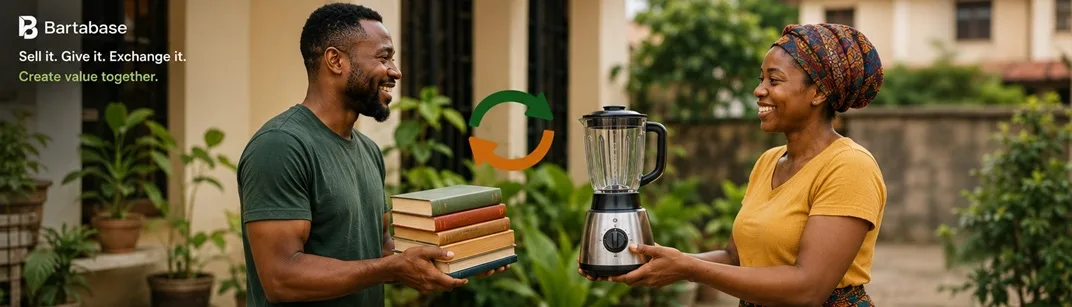
Imagine you have a blender sitting in your kitchen.
It works perfectly. You bought it a few years ago, but you barely use it anymore.
At the same time, someone else has a collection of books they have already read. They are moving to a smaller home and no longer have space for them.
You need the books.
They need a blender.
Why should both of you have to spend money to get what you already need?
This is where one of the oldest forms of commerce becomes surprisingly relevant again:
Exchange.
Long before digital marketplaces, online payments and e-commerce, people exchanged what they had for what they needed.
Today, technology gives us the opportunity to bring that simple idea into the modern economy — making it easier for people to discover one another, negotiate and exchange value directly.
What Exactly Is an Exchange?
Exchange is simple.
You have something I need.
I have something you need.
Instead of one person simply buying from another, both parties agree to trade items or services that are useful to each other.
Sometimes the values are similar.
Sometimes they aren't.
And that's okay.
An exchange could involve a small cash top-up to balance the difference.
For example:
You have: A dining table you no longer need.
Someone else has: A refrigerator you need.
The difference: Perhaps one person adds some money to make the deal fair.
The important thing is that value does not always have to move through money alone.
Why Have We Forgotten How Powerful Exchange Can Be?
Modern commerce has trained us to think in a very straightforward way:
I need something → I need money → I buy it.
But there is another possibility:
I need something → What do I already have that someone else might value?
That small change in thinking can completely change how we consume.
Instead of immediately asking:
“How much does this cost?”
we can sometimes ask:
“What can I offer?”
And that question is particularly relevant in an economy where households and businesses are constantly looking for ways to stretch their resources.
Exchange Can Help You Save Money
Let's be realistic.
Things are expensive.
Furniture, electronics, appliances, clothing, children's items, phones and other household products can represent significant expenses.
But many of us already own things that we don't use very often.
That creates an opportunity.
Instead of spending money to acquire something new, you may be able to exchange something you already own for something you actually need.
Imagine someone has:
- A laptop they rarely use
- A camera sitting in a cupboard
- Furniture they want to replace
- Clothes they have outgrown
- Children's toys their kids no longer play with
- Kitchen appliances they barely use
Those things may be unnecessary to them.
But they could be valuable to someone else.
Exchange allows that value to move.
Your Unused Item Might Be Someone Else's Solution
This is perhaps the most important idea behind exchange.
We often think about our possessions according to their usefulness to us.
If we no longer use something, we may consider it worthless.
But usefulness is relative.
A laptop that is too slow for a professional developer might be perfectly suitable for a student.
A sofa that no longer fits one family's home could be perfect for another family's apartment.
A bicycle gathering dust in a garage could become someone's daily means of transportation.
A camera that has been replaced by a newer model could help someone discover photography.
Unused does not mean useless.
Sometimes, an item simply needs a new owner.

Exchange Is Bigger Than Saving Money
The benefits go beyond your wallet.
1. It keeps useful items in circulation
Instead of products sitting unused or eventually becoming waste, they continue serving a purpose.
2. It reduces unnecessary consumption
If you can exchange for something you need, you may not have to purchase another item from scratch.
3. It creates connections
An exchange connects two people who might otherwise never have met.
4. It gives people more choices
You don't have to limit yourself to what is available in traditional retail stores.
5. It unlocks hidden value
Something you consider unnecessary may have significant value to somebody else.
Exchange Can Strengthen Communities
There is also something deeply human about exchanging.
Think about traditional communities.
People have always shared tools, swapped goods, helped neighbours and found ways to make use of what was available.
The modern economy has made many things easier, but it has also made us increasingly accustomed to buying something whenever we need it.
Technology can help us reconnect with a different idea:
Perhaps the solution is already within our community.
Someone nearby may have exactly what you need.
And you may have exactly what they need.
Consider These Everyday Exchanges
A laptop for a blender
A university student needs a laptop.
A small business owner has an older laptop they no longer use but needs a blender for their home.
They find each other and agree on an exchange.
Two needs are solved without either person having to purchase both items.
Children's clothes for children's toys
A family has bags of children's clothes their children have outgrown.
Another family has toys their children no longer play with.
Rather than allowing both sets of items to sit unused, the families exchange them.
The children get something new to them.
The parents save money.
And perfectly usable products stay in circulation.
Furniture for appliances
Someone is renovating their home and wants to get rid of a perfectly good dining table.
Another person needs a dining table but has a washing machine they no longer need.
They agree on a trade with a small cash adjustment.
Again, value moves.
Nothing useful is wasted.

Exchange Doesn't Have to Be Complicated
Of course, a successful exchange requires trust and clear communication.
Before agreeing to a trade, both parties should:
- Clearly describe the item.
- Upload accurate photographs.
- Be honest about defects or damage.
- Agree on the condition of the items.
- Discuss whether a cash top-up is required.
- Agree on where and how the exchange will take place.
- Verify the item before completing the transaction.
A good exchange isn't about trying to get the better deal.
It is about finding mutual value.
When both parties walk away feeling that they received something worthwhile, everybody wins.
This Is Where Bartabase Can Make a Difference
The idea behind Bartabase is not simply:
“Come here and buy something.”
It is broader.
Come here and discover value.
You can sell something you no longer need.
You can give something away.
You can search for something you need.
And you can explore the possibility of exchanging what you have for what you want.
That creates a different kind of marketplace.
One where a transaction doesn't necessarily begin with:
“How much money do you have?”
It can begin with:
“What do you have?”
What If We Started Looking at Our Possessions Differently?
Think about the things around you.
That extra chair.
That old phone.
Those clothes you haven't worn in two years.
The appliance you replaced.
The books you've already read.
The baby items your children have outgrown.
The equipment sitting in storage.
Instead of asking:
“Why am I still keeping this?”
ask:
“Who might need this?”
Then ask an even more interesting question:
“What might they have that I need?”
That is where exchange begins.
The Environmental Benefit Matters Too
Every new product requires resources.
Materials must be extracted.
Factories must produce it.
Energy must be consumed.
Packaging must be created.
The product must be transported.
And eventually, if it is discarded, it becomes waste.
We cannot eliminate consumption completely — nor should we.
But we can become smarter about it.
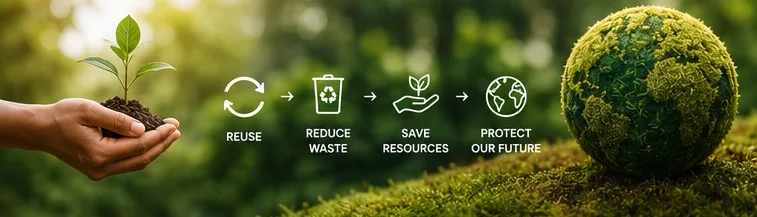
When useful products are exchanged instead of unnecessarily discarded, they get another life.
And sometimes another.
And another.
One product can serve several owners without needing to become waste after the first.
That is one of the principles behind a more circular economy.
Exchange Is Not About Going Backward
Some people may hear the word barter and think of an old-fashioned economic system.
But exchange is not about going backward.
It is about using modern technology to make an old economic principle more accessible.
Today, a person can photograph an item with a smartphone, describe what they want in return, reach thousands of potential users and negotiate an exchange without leaving home.
That's not old-fashioned.
That's technology making an old idea relevant again.
For decades, commerce has been built around a simple model:
Produce → Sell → Buy → Consume → Discard.
But perhaps we can build something better:
Produce → Use → Sell → Exchange → Reuse → Give → Use Again.
That second model keeps value moving for longer.
It gives people more choices.
It can reduce unnecessary waste.
And it allows communities to make better use of the resources they already have.
Before You Buy, Ask One More Question
The next time you need something, pause before reaching for your wallet.
Ask:
“Does someone already have this?”
Then ask:
“Do I have something they might want?”
You might be surprised by what you discover.
Because sometimes the thing you need isn't sitting on a store shelf.
It's sitting in somebody else's home.
And the thing they need might be sitting in yours.
Exchange More. Waste Less. Create More Value.
Bartabase is building a marketplace where people can do more than simply buy and sell.
Sell what you no longer need.
Give what someone else could use.
Exchange what you have for what you need.
Discover value that already exists around you.
Because a smarter economy isn't necessarily one where everyone owns more.
It can be one where what we already have is used better.
You have something. Someone needs something.
Maybe there's a match.
Exchange. Connect. Create value.
Welcome to Bartabase.